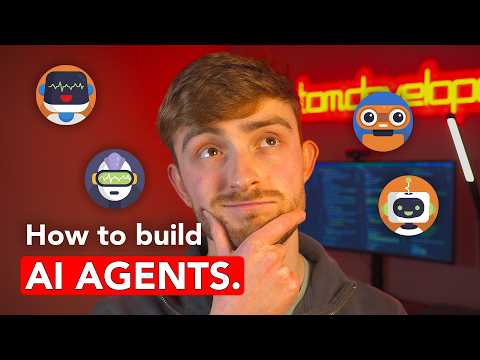
This video explains how to build conversational AI agents using Python. The creator has built their own chatbot and will walk through the codebase, explaining how it works. The chatbot uses an agentic action function to determine which agent should handle the user's instruction, and then delegates tasks to those agents as needed. The process involves creating tools and agents with specific knowledge and abilities, and using them to complete instructions. By following this approach, users can create their own AI-powered chatbots that can automate various tasks and provide helpful responses.
Introduction The video discusses building conversational AI agents using Python. The creator has been working on this project for their business and shares a walkthrough of the codebase and how it works. Key Facts
- The chatbot uses a loop to receive messages, handle instructions, generate responses, and send them back to the user.
- The agentic action function identifies instructions in messages and returns two values: a plain text result and context for the assistant.
- The function uses the message history to determine what instruction the user has given.
- The chatbot can use various interfaces such as terminal, web interface, or voice chat using services like 11Laps.
- The agentic action function receives the entire message history in an array and looks for specific agents that can help with the task.
- Agents have a name, background, list of tools, and expected output. They use a get agent info function to format their information into JSON.
- Tools have a name, description, parameters, response format, and callable function. They use a run tool function to execute tasks.
- The agentic action function uses agents and tools to help make decisions on how to handle user messages.
Conclusion The video concludes by explaining that the AI assistant uses the agentic action function to determine which agent is best suited to handle the user’s instruction. The agent then uses its knowledge of its specialist subject and list of tools to complete the task, passing the result back to the AI assistant who generates a friendly response to send back to the user.