Source of this article and featured image is Wired Science. Description and key fact are generated by Codevision AI system.
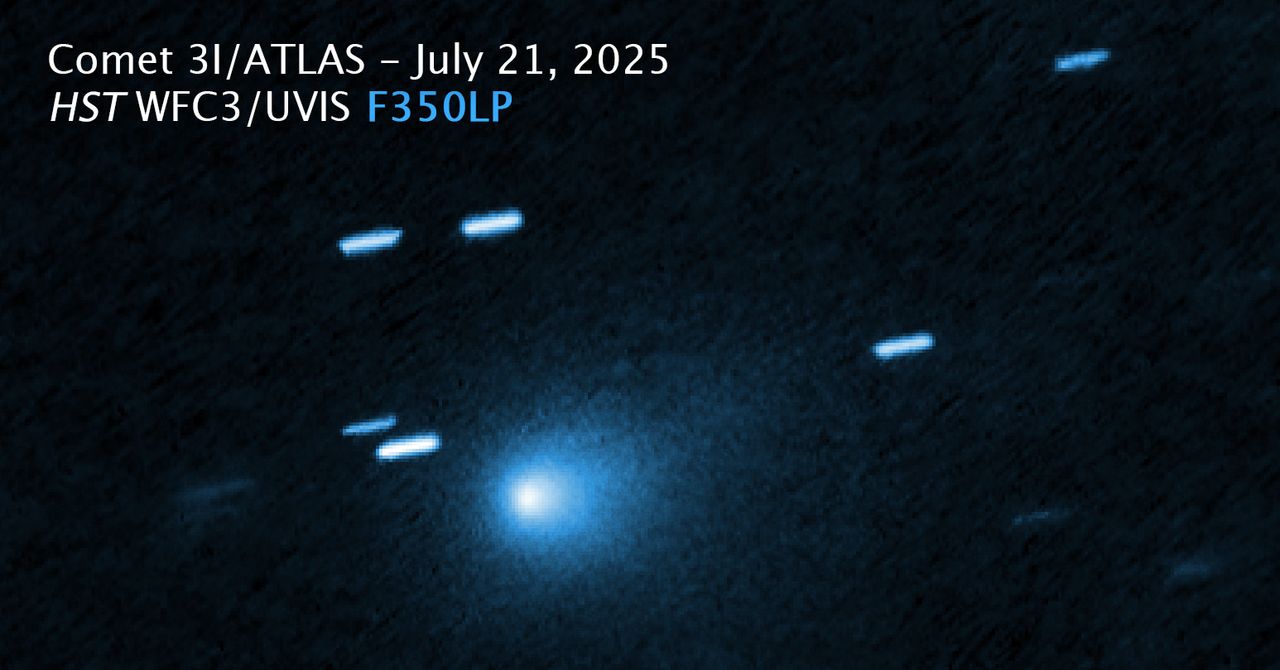
New evidence supports the natural origin of comet 3I/Atlas, ending debates about its nature. A radio signal detected by the MeerKAT telescope in South Africa confirms the presence of hydroxyl radicals, a common feature in comets. The signal, detected at 1665 MHz and 1667 MHz, aligns with typical comet activity. This finding was made possible by the telescope’s 64 antennas, each 13.5 meters in diameter. The detection highlights the importance of radio astronomy in understanding celestial phenomena. This article is worth reading because it provides a clear explanation of how radio signals help identify comets. Readers will learn how hydroxyl radicals are detected and their role in understanding cosmic objects.
Key facts
- A radio signal from comet 3I/Atlas was detected by the MeerKAT telescope in South Africa.
- The signal, detected at 1665 MHz and 1667 MHz, is linked to hydroxyl radicals (OH molecules).
- The OH absorption pattern is consistent with typical comet activity, not technological signals.
- The detection was made possible by the MeerKAT telescope’s 64 antennas, each 13.5 meters in diameter.
- The OH spectral lines help astronomers map regions in space where stars and water are formed.