
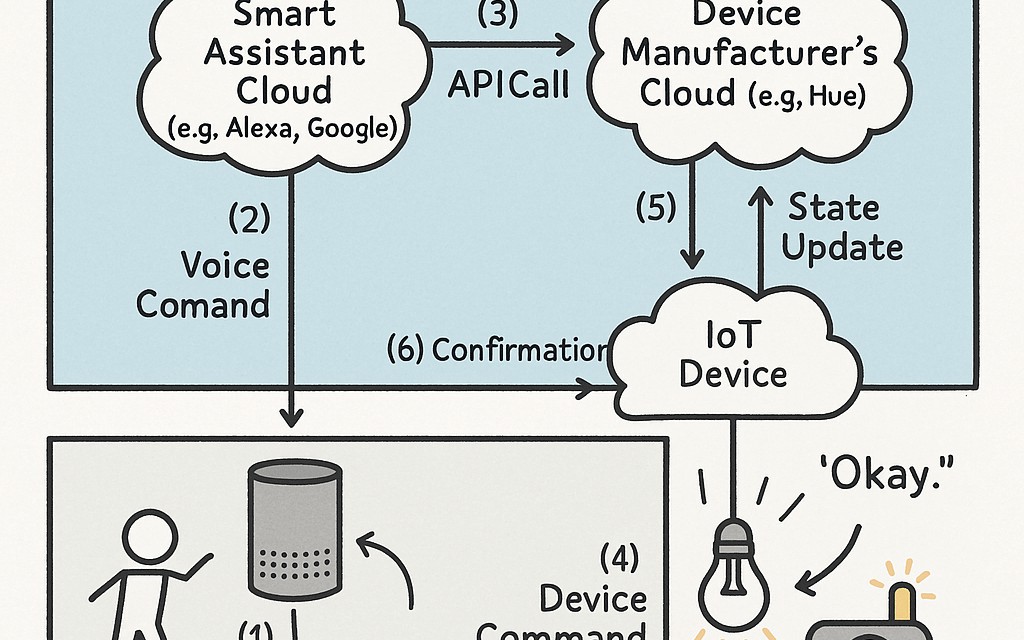
Source of this article and featured image is DZone IoT. Description and key fact are generated by Codevision AI system.
This in-depth tutorial explores how IoT devices connect with voice assistants like Alexa, Google Assistant, and HomeKit. Written by Praveen Chinnusamy, it covers technical frameworks, security protocols, and development best practices for smart home integrations. Developers will gain insights into secure communication methods, state synchronization techniques, and cross-platform compatibility strategies. The guide is essential for understanding the complexities of IoT-voice assistant ecosystems. Readers will learn to implement secure APIs, manage device interactions, and optimize performance for real-time updates.
Key facts
- Voice commands follow a cloud-mediated flow: user → assistant → cloud → device → cloud → assistant.
- Secure communication uses HTTPS/TLS encryption, OAuth 2.0 for account linking, and signed firmware updates.
- State synchronization involves either polling (assistant requests device status) or push (device sends updates).
- Development challenges include latency optimization, handling offline scenarios, and platform-specific capability mapping.
- Future trends focus on Matter standardization, edge computing for local execution, and context-aware automation.
TAGS:
#developer guides #device communication #IoT integration #smart home security #voice assistant protocols