
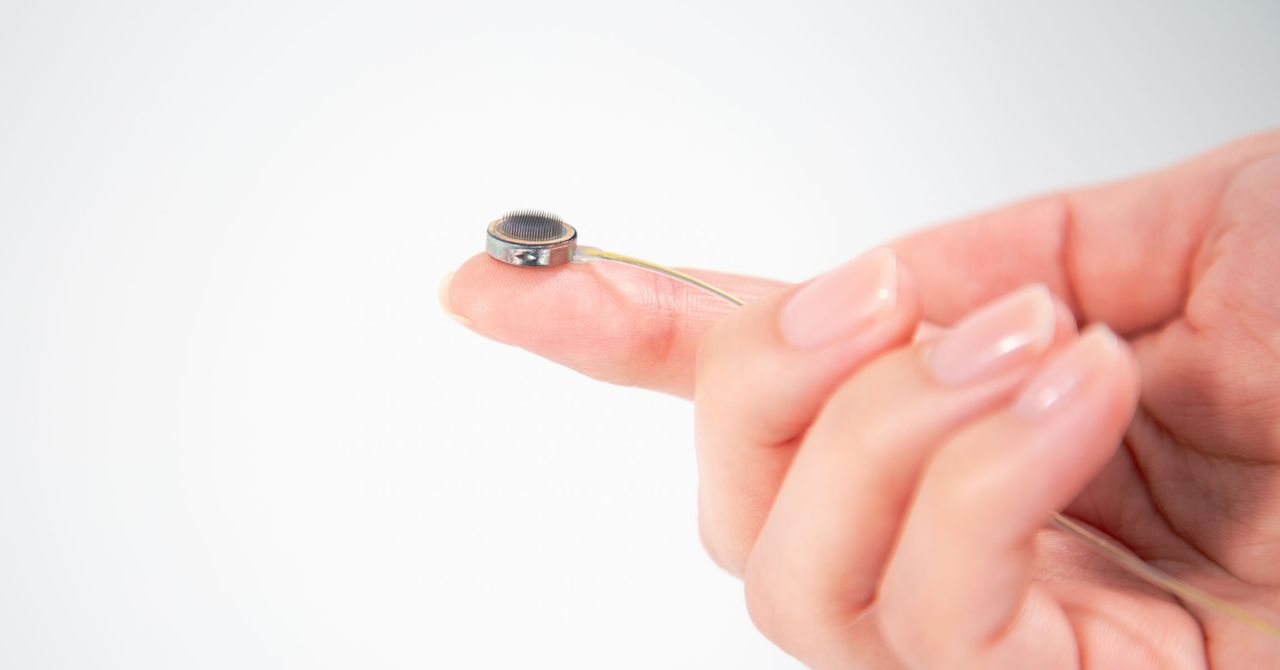
Paradromics, an Austin-based startup, has secured FDA approval to begin an early-stage human trial for its brain implant designed to restore speech in individuals with severe motor impairments. The device aims to translate brain signals into synthesized speech and text, with safety and functionality assessments as key priorities. The trial will initially involve two participants, with potential expansion to include more volunteers after six months of data collection. The company’s technology competes with other brain-computer interface (BCI) developers like Neuralink and Synchron, focusing on high-bandwidth data transfer for improved communication. Emily Mullin, the Wired Science reporter, highlights the significance of this milestone in advancing neural interface technology for medical applications.
Key facts
- Paradromics received FDA approval to test its brain implant in a human trial for speech restoration.
- The trial will evaluate the device’s safety and ability to enable synthesized speech and text communication.
- The company’s technology competes with Neuralink and Synchron, focusing on high-bandwidth neural data transfer.
- The Connexus implant features 421 microwire electrodes to record signals from individual neurons.
- Paradromics achieved a 200-bits-per-second data transfer rate in sheep trials, surpassing Neuralink’s previous benchmark.